
The food waste guide: how to stop throwing food away
I used to throw food away every single week. Never much at once. Half a bag of salad, the end of the cream cheese, three brown bananas. It adds up though, and it is not just me: most food waste happens at home, not in shops or restaurants.
The strange part is that almost none of it was bad when I bought it. It just sat at the back of the fridge for too long, and then one day it was too late.
At some point I looked at where exactly it goes wrong, and it is always the same few places. This is what actually changed things for me. You do not have to do all of it. Pick two and start there.
It starts in the shop
The best trick is also the most boring one: look in the fridge before you leave. If you cannot be bothered, and I often cannot, take a photo of the open fridge. It takes two seconds and you will not end up standing in the aisle wondering whether there is still milk at home.
That is exactly how the third tube of tomato paste happens. And the second jar of mustard. You buy it because you are no longer sure there is any left.
Something else that helped: I now shop for three or four actual dinners and no longer just "for the week". Whatever lands in the trolley without a plan is the stuff that is still there on Sunday.
With big packs and three for two deals I ask myself right there in the shop what happens to the extra. If I can freeze it, it comes home with me. If nothing comes to mind, it was never a deal.
The date on the pack
This is where the most perfectly good food gets thrown out. There are two different labels and they do not mean the same thing.
"Best before" only means the manufacturer promises that everything tastes and looks the way it should until then. After that it is not automatically bad. Yogurt is often fine for another week, sometimes two. So is hard cheese. With pasta, rice and tins we are talking months. Open it, look at it, smell it, taste it. Your nose is pretty reliable here.
"Use by" is different. You find it on mince, fresh chicken and raw fish, and it means what it says. Nothing gets tasted after that date. If you can see you will not get to it in time, freeze it before.
In the US you will also see "sell by". That one is for the shop, not for you.
What goes where
I kept tomatoes in the fridge for years. They do not belong there, the cold takes their flavour away. Neither does bread, which goes stale faster in the fridge than out of it. Bananas turn brown. Onions and potatoes like it dark and cool but not next to each other, or the potatoes start sprouting. Honey and olive oil do not need a fridge at all.
Inside the fridge it is not equally cold everywhere, by the way. The bottom shelf, just above the vegetable drawer, is the coldest, so that is where meat and fish go. The door is the warmest spot. Butter, drinks and sauces are fine there. Milk not really, even though the shelf looks like it was built for it.
A few small things that make a big difference with vegetables:
- Herbs go in a glass of water, like flowers.
- Carrots stay crisp a lot longer in a box of water.
- Salad likes a sheet of kitchen paper in the box. It soaks up the moisture that turns the leaves soggy.
- Wrap cheese in baking paper, not cling film, so it does not sweat.
- Apples are best kept on their own. They make everything around them ripen faster.
What helped me most, though, is one plain box in the fridge. Everything that has to go first lives in there: the open cream cheese, half a pepper, last week's yogurt. Whoever is hungry looks in there first.
Freezing
The freezer is a pause button. Whatever goes in stays the way it is right now. It does not get worse, but it does not get better either. Dry bread comes out dry. So freeze things a day too early, not a day too late.
And far more can go in there than you would think:
- Bread. Slice it first or you will be defrosting the whole loaf every time. The slices go straight from the freezer into the toaster. Good for one to three months.
- Bananas. Peel them first, whatever you do. You will not get a frozen banana out of its skin, I have tried. Great for smoothies and banana bread. Three months.
- Grated cheese. Cheddar, gouda, parmesan. Grate it, then freeze it, because a whole block turns crumbly. Goes on frozen. Two to three months.
- Cooked rice. Do not leave it sitting in the pot for hours. Cool it within an hour, portion it into freezer bags, press them flat. Reheat it until it is piping hot and only reheat it once. One month.
- Ginger. The whole root, skin and all. It actually grates better frozen. Six months.
- Eggs. Never in the shell, it cracks. Break them, whisk them, pour them into small tubs and write on the lid how many there are. Defrost in the fridge and cook them through. Six months.
- Tomato paste. Spoon blobs onto baking paper, freeze them, then tip them into a bag. You throw a frozen blob straight into the sauce. Three to six months.
- Lemons. Freeze the slices on a board first and bag them afterwards, or you get one solid lump. Three months.
- Pancakes. Let them cool and stack them with baking paper in between. One to two months.
- Butter. Leave it in its wrapper and bag it as well, it picks up smells quickly. A good six months.
- Fresh herbs. Chop them and top them up with oil or water in an ice cube tray. Parsley, chives and dill cope well. Turn basil into pesto first.
- Mince and other meat. Freeze it the day you buy it, not the day before the date. Press mince flat in the bag and it defrosts in half an hour. One to three months.
- Cooked meals. Stews, curries, bolognese, soups. This is what the freezer was made for. Three months.
Berries, chopped onions, whole chillies and nuts work too. Stock and the last splash of wine go into an ice cube tray.
Some things do not work. Anything that is mostly water and eaten raw, so cucumber, lettuce and radishes, comes out as mush. Raw potatoes go glassy, hard boiled eggs turn to rubber. Yogurt and mayonnaise split when they thaw. And raw meat that has been defrosted once has to be cooked before it is allowed back in.
Three things I stick to now: squeeze the air out of the bag, freeze it flat, and write on it what it is and when it went in. Labelling sounds over the top until the first time you defrost bolognese and it turns out to be chilli.
Leftovers
When I cook something that reheats well, I make double. Half goes into a tub before we eat. Nobody does it after dinner.
Once a week we eat whatever is there. Leftover vegetables in a pan, an egg on top, rice or pasta on the side. It has no name and it nearly always tastes good.
It works best when one dinner runs into the next. Monday's roasted vegetables get wrapped in Tuesday's tortillas. The feta left over from Wednesday ends up in Thursday's pasta.
Remembering is the hard part
None of it is complicated. The hard part is thinking of it at the right moment. Knowing in the shop what is still at home. Noticing today that the yogurt runs out tomorrow, and not the day after.
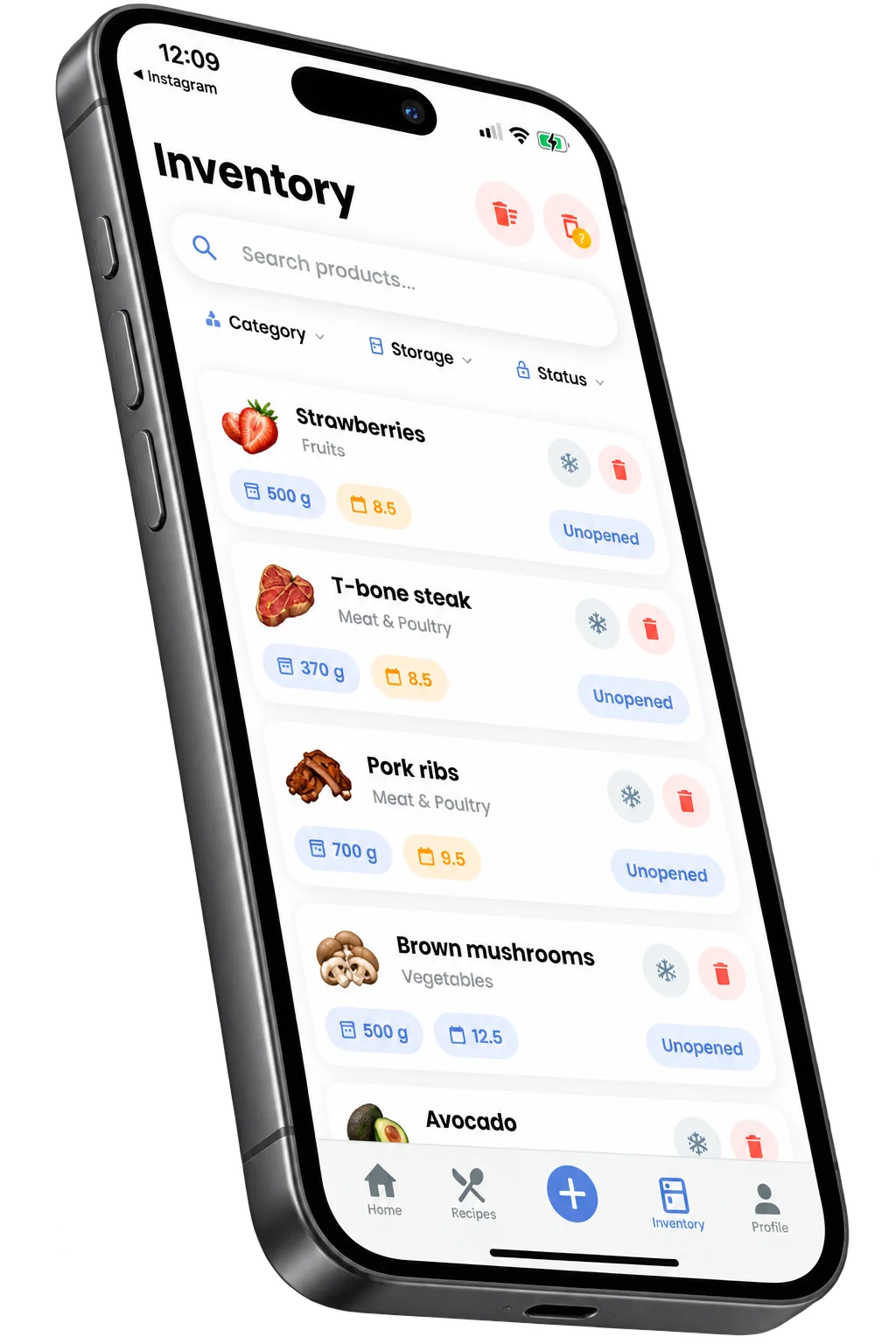
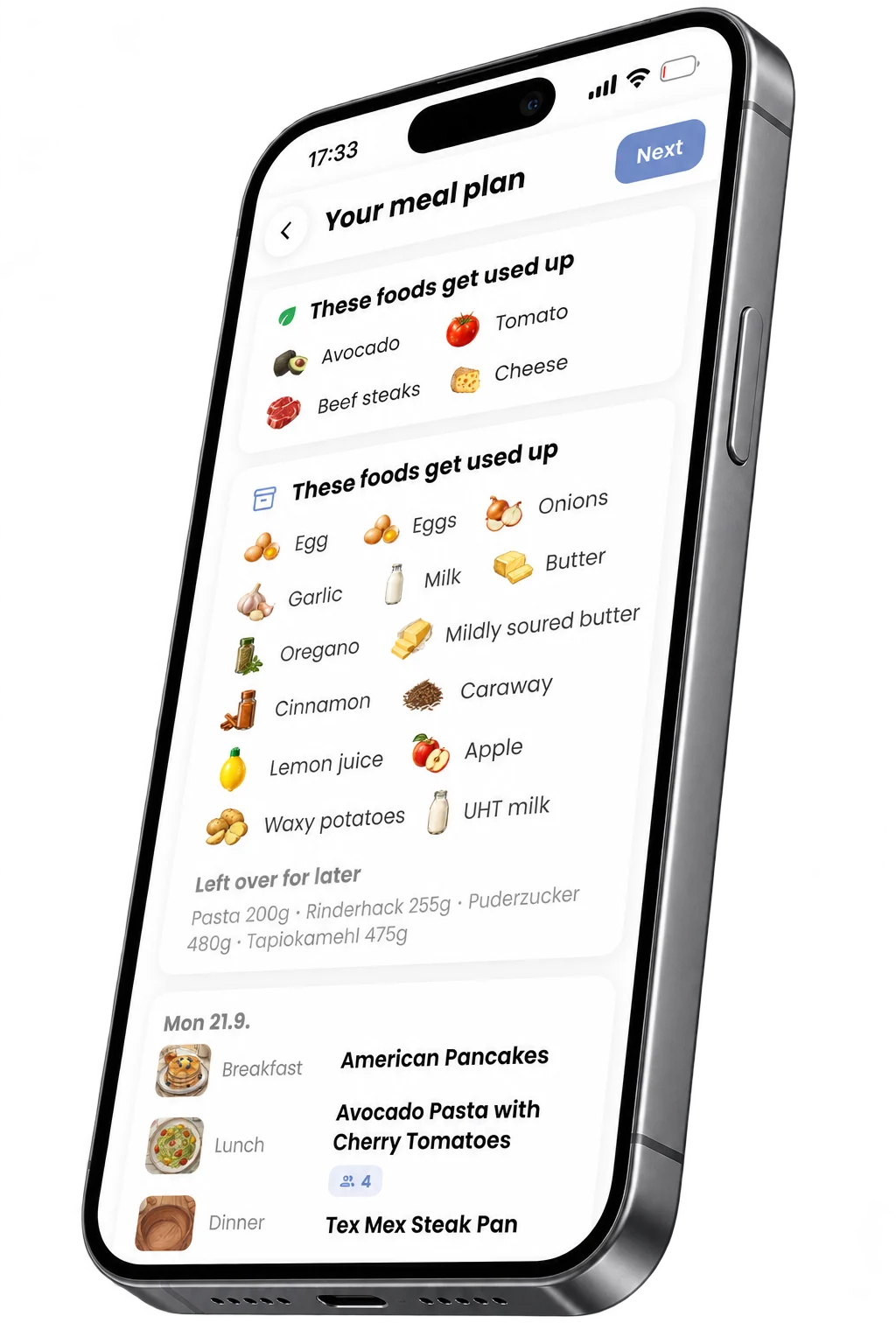
That is why we are building Mealyo. The app knows what is in your kitchen, tells you before something goes off, and plans your week around what you actually have at home.
It is not in the App Store yet. If you want to hear the moment it is, sign up further down. Everyone on the waitlist gets 30 days of Premium free at launch.